Have you ever tried to get as many cookies as possible from a single sheet of dough? You probably turned the cookie cutters and squeezed them close together, using every last bit of space. In the world of manufacturing, this exact same idea is called “nesting.” Instead of cookie dough, however, factories use it to plan cuts on massive, expensive material sheets of steel, aluminum, or wood. The nesting process is how they arrange digital shapes to ensure as little as possible goes to waste.
This careful arrangement can make a surprising difference. Imagine you need to cut ten L-shaped brackets from a single sheet of metal. If you line them all up the same way, you create large, useless gaps. But by simply changing the part orientation—rotating every other “L” shape by 180 degrees—they suddenly interlock like puzzle pieces. As the graphic shows, this simple trick allows far more parts to fit onto one sheet, drastically reducing leftover scrap.
This high-stakes game of Tetris has a clear goal: maximizing material yield. In simple terms, material yield is the measurement of how much of a raw sheet is successfully turned into usable parts versus how much ends up in the recycling bin. In practice, better yield means less wasted material, and for any company making physical products, that directly translates into lower costs and faster production.
Why Good Nesting Can Cut Material Costs By Over 15%
The most direct benefit of smart nesting is a lower price tag on your final parts.
When factories make things, they buy raw m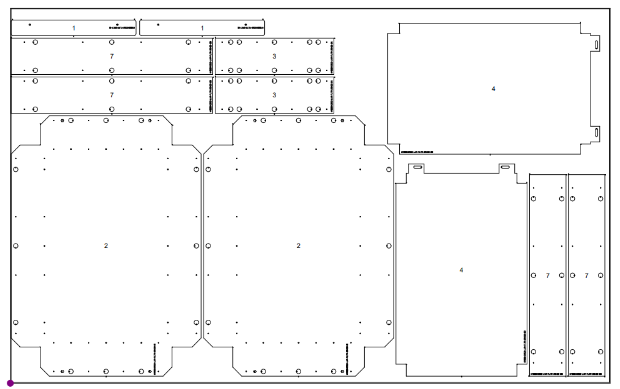 aterials like steel, aluminum, or wood in large, expensive sheets. Every square inch of that material that ends up in the scrap bin is wasted money. By arranging parts tig
htly together, nesting dramatically reduces this waste, meaning the factory buys fewer sheets to complete your job. This saving on raw materials is pa
ssed directly on to you, making it one of the most effective strategies for reducing fabrication costs.
To see the financial impact, imagine a project that requires cutting
parts from several sheets of metal that cost $500 each.
A basic, inefficient layout might require 10 sheets, bringing the total material bill to $5,000. However, by using intelligent nesting software to rotate and interlock the same parts, the job might only require 8 sheets. This simple change instantly drops the material cost to $4,000, saving $1,000 on a single project—a 20% reduction.
This improvement in what manufacturers call “material yield,” or the percentage of material that becomes a finished part, is why modern nesting is so critical. Achieving a 10-15% improvement in material use is a common and realistic goal with today’s optimization techniques. But the savings don’t stop at the raw material bill. Using fewer sheets also has another powerful benefit: it gets the job done much faster.
Speed and Efficiency
Speed is another critical advantage of fibre lasers. High-speed laser cutting services allow manufacturers like Ameritex to produce large quantities of parts quickly without sacrificing quality. This efficiency not only speeds up production times but also reduces manufacturing costs, making it a win-win for both the manufacturer and the customer. Furthermore, the rapid processing times of fibre lasers mean that businesses can respond more swiftly to market demands, reducing lead times and increasing their competitive edge. By streamlining production processes, Ameritex can handle larger volumes and ensure that projects remain on schedule, regardless of their complexity.
How Smart Nesting Reduces Manufacturing Lead Time
Saving money is great, but getting your parts faster is often just as important. This is where nesting delivers another huge benefit by reducing what’s known as lead time the total time from the moment you place an order to when the finished parts are delivered. It achieves this not just in one, but in two clever ways.
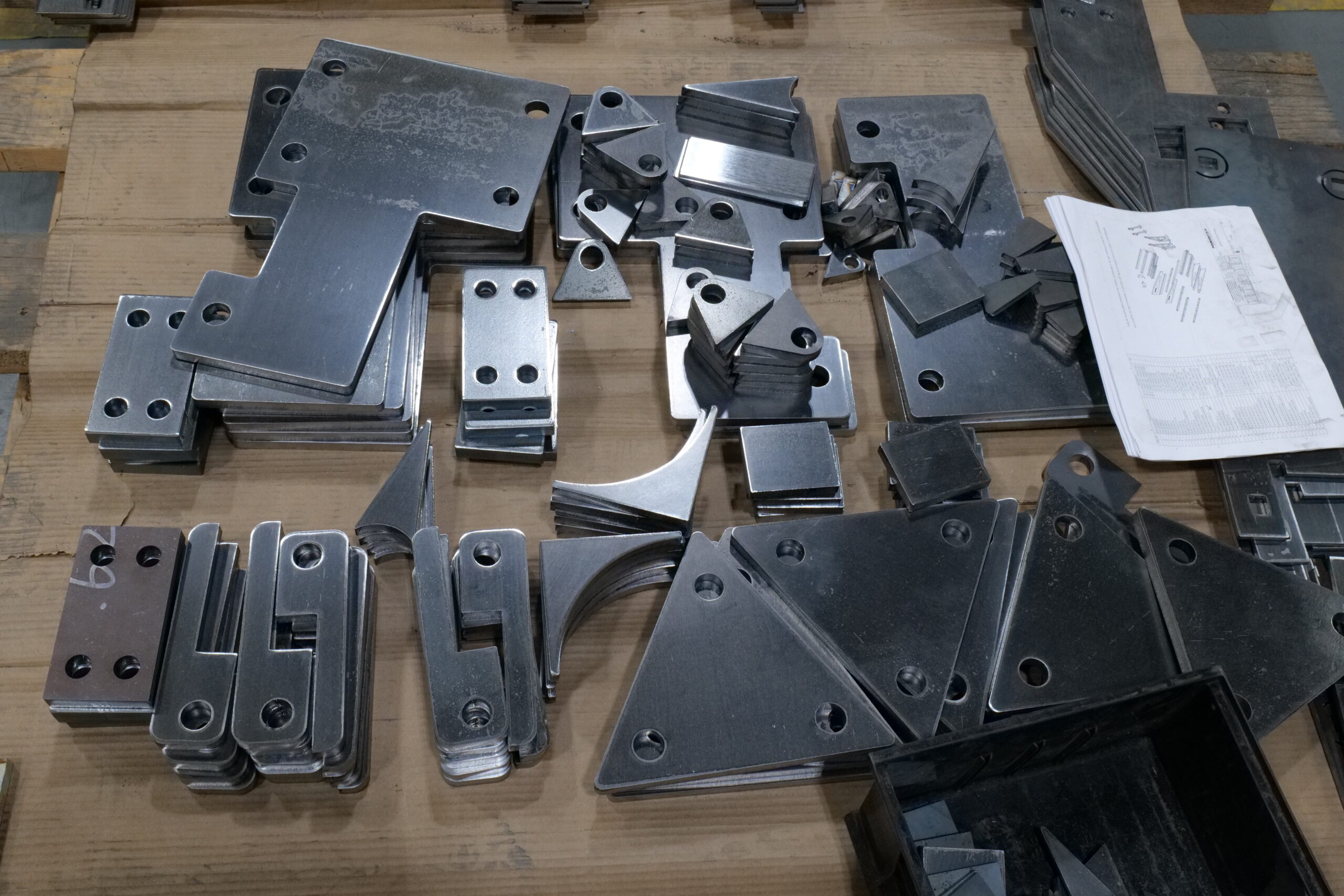
First, think about the machine that cuts the parts. Every time it finishes with one sheet of metal, production has to stop so a new one can be loaded. This is called machine setup time. Because a well-nested layout fits more parts onto a single sheet, the machine requires fewer of these time-consuming changes. For a
large order, eliminating even a few sheet swaps can shave hours off the total production schedule.
Additionally, the physical path the cutting tool takes from one part to the next has a major impact. When parts are arranged tightly, the tool travels a much shorter distance across the material. While this might only save a few seconds per part, it adds up to significant time savings over a run of hundreds
or thousands of pieces. This incredible efficiency, far beyond what a human could plan by eye, is why software has become the unbeatable champion of nesting.
Human vs. Machine: Software is the Unbeatable Nesting Champion
You might wonder if a skilled person couldn’t just arrange the parts by eye. For years, that’s exactly how it was done—a process called manual nesting. An operator would painstakingly drag and rotate digital shapes on a screen, trying to find a good fit. But even the best human planner can only test a handful of layouts, and their best guess is often far from the most efficient arrangement.
In contrast, modern nesting software automates this entire process. In just a few seconds, it can simulate thousands of different combinations—rotating parts by fractions of a degree and shifting them to find the absolute tightest fit. It’s a level of optimization a human could never achieve, ensuring the final layout wastes as little material as possible.
The software’s biggest advantage is a capability called True Shape Nesting. Instead of putting an imaginary box around each part, the software sees its exact, intricate outline. This allows it to interlock complex, irregular shapes like puzzle pieces, fitting a curved edge right into a concave one. This intelligent placement is the key to maximizing material use and turning a good layout into a perfect one.
The Final Result: Nesting is a Secret Weapon for Smarter Manufacturing
You now see what was once invisible: the clever thinking that makes modern manufacturing possible. This efficient nesting of parts is a true win-win-win. It drives down costs by reducing waste, speeds up delivery by optimizing machine time, and improves quality by ensuring consistent, accurate cuts across thousands of pieces.
So, the next time you see a complex product made from metal, wood, or fabric, you’ll know one of the clever secrets to how it was made so efficiently—it all started with a well-played game of industrial Tetris.